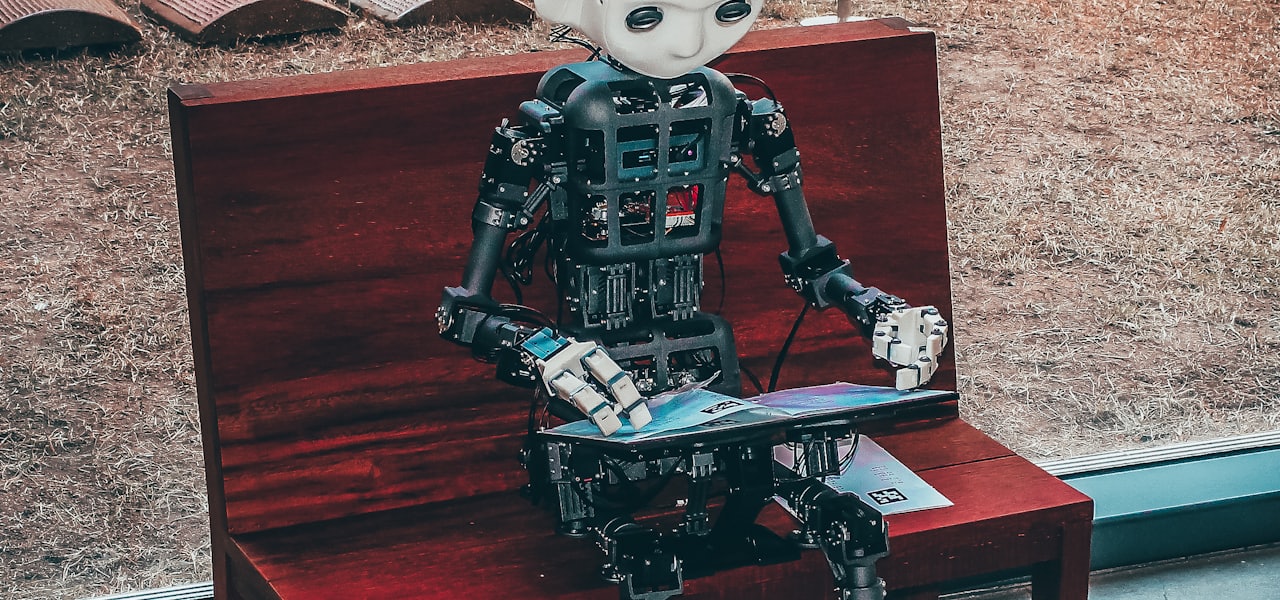
Comparing the best AI text-to-image tool? An AI text-to-image tool is software that uses machine learning to help you get more done — it lowers the barrier so anyone can produce professional output. Privacy matters too: check whether your data trains the model and whether a no-log or enterprise tier is available. Whether you are a beginner or a pro, the right AI text-to-image tool slots into your workflow and pays for itself fast. Below we compare features, pricing, and real output so you can choose with confidence.
AI browser
An AI browser is a web browser with integrated artificial intelligence capabilities, such as automatically summarizing web page content or answering questions about it. A more specialized type is an agentic browser, based on the concept of agentic AI, which can take actions – such as navigating webpages or filling out forms – on behalf of the user. Several agentic browsers emerged in 2025, including ChatGPT Atlas (macOS only), Comet, and Dia. As of 2025, this is a recent development in the browser market, including new entrants from OpenAI, Opera and Perplexity. The designation of 'AI browser' also includes established browsers that later added non-agentic AI features, such as Microsoft Edge with the Copilot chatbot, Google Chrome with the Gemini chatbot (for Windows desktop users in the US with their language set to English), and Firefox with multiple chatbot providers (such as ChatGPT, Claude, Copilot, Gemini, and Le Chat). AI browsers have been noted to be susceptible to prompt injection attacks. == Browser extensions and integrations == Rather than creating entirely new browsers, some AI browsing solutions integrate with existing browsers through extensions or companion applications. These tools add agentic capabilities to established browsers without requiring users to switch platforms. Examples include Composite, which functions as a cross-browser agent that works with Chrome, Edge, and other browsers to automate web-based tasks for workers. == Cloud-based implementations == Cloud-based implementations of AI browsers allow users to run automated browsing agents without local installation. These systems operate on remote servers using frameworks such as Puppeteer or Playwright. Examples include Browserbase, Browser-use and AI Browser. The AI typically parses the Document Object Model (DOM) to locate and interact with page elements, and may also analyze browser screenshots to interpret layout and structure. == Criticisms and dangers == AI browsers have been noted to be susceptible to being vulnerable to prompt injection attacks, in which the content of websites can be used to hijack the control of the browser. Multiple organisations have argued against using AI browsers due to this vulnerability. The United Kingdom national cyber security centre and Gartner consider them to be too risky for adoption by most organisations. A study by the CISPA Helmholtz Center and Saarland University concluded that this vulnerability makes them easy targets for malware, fraud, automated defamation, disinformation and biased outputs.
Variational message passing
Variational message passing (VMP) is an approximate inference technique for continuous- or discrete-valued Bayesian networks, with conjugate-exponential parents, developed by John Winn. VMP was developed as a means of generalizing the approximate variational methods used by such techniques as latent Dirichlet allocation, and works by updating an approximate distribution at each node through messages in the node's Markov blanket. == Likelihood lower bound == Given some set of hidden variables H {\displaystyle H} and observed variables V {\displaystyle V} , the goal of approximate inference is to maximize a lower-bound on the probability that a graphical model is in the configuration V {\displaystyle V} . Over some probability distribution Q {\displaystyle Q} (to be defined later), ln P ( V ) = ∑ H Q ( H ) ln P ( H , V ) P ( H | V ) = ∑ H Q ( H ) [ ln P ( H , V ) Q ( H ) − ln P ( H | V ) Q ( H ) ] {\displaystyle \ln P(V)=\sum _{H}Q(H)\ln {\frac {P(H,V)}{P(H|V)}}=\sum _{H}Q(H){\Bigg [}\ln {\frac {P(H,V)}{Q(H)}}-\ln {\frac {P(H|V)}{Q(H)}}{\Bigg ]}} . So, if we define our lower bound to be L ( Q ) = ∑ H Q ( H ) ln P ( H , V ) Q ( H ) {\displaystyle L(Q)=\sum _{H}Q(H)\ln {\frac {P(H,V)}{Q(H)}}} , then the likelihood is simply this bound plus the relative entropy between P {\displaystyle P} and Q {\displaystyle Q} . Because the relative entropy is non-negative, the function L {\displaystyle L} defined above is indeed a lower bound of the log likelihood of our observation V {\displaystyle V} . The distribution Q {\displaystyle Q} will have a simpler character than that of P {\displaystyle P} because marginalizing over P {\displaystyle P} is intractable for all but the simplest of graphical models. In particular, VMP uses a factorized distribution Q ( H ) = ∏ i Q i ( H i ) , {\displaystyle Q(H)=\prod _{i}Q_{i}(H_{i}),} where H i {\displaystyle H_{i}} is a disjoint part of the graphical model. == Determining the update rule == The likelihood estimate needs to be as large as possible; because it's a lower bound, getting closer log P {\displaystyle \log P} improves the approximation of the log likelihood. By substituting in the factorized version of Q {\displaystyle Q} , L ( Q ) {\displaystyle L(Q)} , parameterized over the hidden nodes H i {\displaystyle H_{i}} as above, is simply the negative relative entropy between Q j {\displaystyle Q_{j}} and Q j ∗ {\displaystyle Q_{j}^{}} plus other terms independent of Q j {\displaystyle Q_{j}} if Q j ∗ {\displaystyle Q_{j}^{}} is defined as Q j ∗ ( H j ) = 1 Z e E − j { ln P ( H , V ) } {\displaystyle Q_{j}^{}(H_{j})={\frac {1}{Z}}e^{\mathbb {E} _{-j}\{\ln P(H,V)\}}} , where E − j { ln P ( H , V ) } {\displaystyle \mathbb {E} _{-j}\{\ln P(H,V)\}} is the expectation over all distributions Q i {\displaystyle Q_{i}} except Q j {\displaystyle Q_{j}} . Thus, if we set Q j {\displaystyle Q_{j}} to be Q j ∗ {\displaystyle Q_{j}^{}} , the bound L {\displaystyle L} is maximized. == Messages in variational message passing == Parents send their children the expectation of their sufficient statistic while children send their parents their natural parameter, which also requires messages to be sent from the co-parents of the node. == Relationship to exponential families == Because all nodes in VMP come from exponential families and all parents of nodes are conjugate to their children nodes, the expectation of the sufficient statistic can be computed from the normalization factor. == VMP algorithm == The algorithm begins by computing the expected value of the sufficient statistics for that vector. Then, until the likelihood converges to a stable value (this is usually accomplished by setting a small threshold value and running the algorithm until it increases by less than that threshold value), do the following at each node: Get all messages from parents. Get all messages from children (this might require the children to get messages from the co-parents). Compute the expected value of the nodes sufficient statistics. == Constraints == Because every child must be conjugate to its parent, this has limited the types of distributions that can be used in the model. For example, the parents of a Gaussian distribution must be a Gaussian distribution (corresponding to the Mean) and a gamma distribution (corresponding to the precision, or one over σ {\displaystyle \sigma } in more common parameterizations). Discrete variables can have Dirichlet parents, and Poisson and exponential nodes must have gamma parents. More recently, VMP has been extended to handle models that violate this conditional conjugacy constraint. == Literature == John Winn; Christopher M. Bishop (2005). "Variational Message Passing" (PDF). Journal of Machine Learning Research. 6: 661–694. ISSN 1533-7928. Wikidata Q139488859. Beal, M.J. (2003). Variational Algorithms for Approximate Bayesian Inference (PDF) (PhD). Gatsby Computational Neuroscience Unit, University College London. Archived from the original (PDF) on 2005-04-28. Retrieved 2007-02-15.
Soft independent modelling of class analogies
Soft independent modelling by class analogy (SIMCA) is a statistical method for supervised classification of data. The method requires a training data set consisting of samples (or objects) with a set of attributes and their class membership. The term soft refers to the fact the classifier can identify samples as belonging to multiple classes and not necessarily producing a classification of samples into non-overlapping classes. == Method == In order to build the classification models, the samples belonging to each class need to be analysed using principal component analysis (PCA); only the significant components are retained. For a given class, the resulting model then describes either a line (for one Principal Component or PC), plane (for two PCs) or hyper-plane (for more than two PCs). For each modelled class, the mean orthogonal distance of training data samples from the line, plane, or hyper-plane (calculated as the residual standard deviation) is used to determine a critical distance for classification. This critical distance is based on the F-distribution and is usually calculated using 95% or 99% confidence intervals. New observations are projected into each PC model and the residual distances calculated. An observation is assigned to the model class when its residual distance from the model is below the statistical limit for the class. The observation may be found to belong to multiple classes and a measure of goodness of the model can be found from the number of cases where the observations are classified into multiple classes. The classification efficiency is usually indicated by Receiver operating characteristics. In the original SIMCA method, the ends of the hyper-plane of each class are closed off by setting statistical control limits along the retained principal components axes (i.e., score value between plus and minus 0.5 times score standard deviation). More recent adaptations of the SIMCA method close off the hyper-plane by construction of ellipsoids (e.g. Hotelling's T2 or Mahalanobis distance). With such modified SIMCA methods, classification of an object requires both that its orthogonal distance from the model and its projection within the model (i.e. score value within the region defined by the ellipsoid) are not significant. == Application == SIMCA as a method of classification has gained widespread use especially in applied statistical fields such as chemometrics and spectroscopic data analysis.
Bootstrap aggregating
Bootstrap aggregating, also called bagging (from bootstrap aggregating) or bootstrapping, is a machine learning (ML) ensemble meta-algorithm designed to improve the stability and accuracy of ML classification and regression algorithms. It also reduces variance and overfitting. Although it is usually applied to decision tree methods, it can be used with any type of method. Bagging is a special case of the ensemble averaging approach. == Description of the technique == Given a standard training set D {\displaystyle D} of size n {\displaystyle n} , bagging generates m {\displaystyle m} new training sets D i {\displaystyle D_{i}} , each of size n ′ {\displaystyle n'} , by sampling from D {\displaystyle D} uniformly and with replacement. By sampling with replacement, some observations may be repeated in each D i {\displaystyle D_{i}} . If n ′ = n {\displaystyle n'=n} , then for large n {\displaystyle n} the set D i {\displaystyle D_{i}} is expected to have the fraction (1 - 1/e) (~63.2%) of the unique samples of D {\displaystyle D} , the rest being duplicates. This kind of sample is known as a bootstrap sample. Sampling with replacement ensures each bootstrap is independent from its peers, as it does not depend on previous chosen samples when sampling. Then, m {\displaystyle m} models are fitted using the above bootstrap samples and combined by averaging the output (for regression) or voting (for classification). Bagging leads to "improvements for unstable procedures", which include, for example, artificial neural networks, classification and regression trees, and subset selection in linear regression. Bagging was shown to improve preimage learning. On the other hand, it can mildly degrade the performance of stable methods such as k-nearest neighbors. == Process of the algorithm == === Key Terms === There are three types of datasets in bootstrap aggregating. These are the original, bootstrap, and out-of-bag datasets. Each section below will explain how each dataset is made except for the original dataset. The original dataset is whatever information is given. === Creating the bootstrap dataset === The bootstrap dataset is made by randomly picking objects from the original dataset. Also, it must be the same size as the original dataset. However, the difference is that the bootstrap dataset can have duplicate objects. Here is a simple example to demonstrate how it works along with the illustration below: Suppose the original dataset is a group of 12 people. Their names are Emily, Jessie, George, Constantine, Lexi, Theodore, John, James, Rachel, Anthony, Ellie, and Jamal. By randomly picking a group of names, let us say our bootstrap dataset had James, Ellie, Constantine, Lexi, John, Constantine, Theodore, Constantine, Anthony, Lexi, Constantine, and Theodore. In this case, the bootstrap sample contained four duplicates for Constantine, and two duplicates for Lexi, and Theodore. === Creating the out-of-bag dataset === The out-of-bag dataset represents the remaining people who were not in the bootstrap dataset. It can be calculated by taking the difference between the original and the bootstrap datasets. In this case, the remaining samples who were not selected are Emily, Jessie, George, Rachel, and Jamal. Keep in mind that since both datasets are sets, when taking the difference the duplicate names are ignored in the bootstrap dataset. The illustration below shows how the math is done: === Application === Creating the bootstrap and out-of-bag datasets is crucial since it is used to test the accuracy of ensemble learning algorithms like random forest. For example, a model that produces 50 trees using the bootstrap/out-of-bag datasets will have a better accuracy than if it produced 10 trees. Since the algorithm generates multiple trees and therefore multiple datasets the chance that an object is left out of the bootstrap dataset is low. The next few sections talk about how the random forest algorithm works in more detail. === Creation of Decision Trees === The next step of the algorithm involves the generation of decision trees from the bootstrapped dataset. To achieve this, the process examines each gene/feature and determines for how many samples the feature's presence or absence yields a positive or negative result. This information is then used to compute a confusion matrix, which lists the true positives, false positives, true negatives, and false negatives of the feature when used as a classifier. These features are then ranked according to various classification metrics based on their confusion matrices. Some common metrics include estimate of positive correctness (calculated by subtracting false positives from true positives), measure of "goodness", and information gain. These features are then used to partition the samples into two sets: those that possess the top feature, and those that do not. The diagram below shows a decision tree of depth two being used to classify data. For example, a data point that exhibits Feature 1, but not Feature 2, will be given a "No". Another point that does not exhibit Feature 1, but does exhibit Feature 3, will be given a "Yes". This process is repeated recursively for successive levels of the tree until the desired depth is reached. At the very bottom of the tree, samples that test positive for the final feature are generally classified as positive, while those that lack the feature are classified as negative. These trees are then used as predictors to classify new data. === Random Forests === The next part of the algorithm involves introducing yet another element of variability amongst the bootstrapped trees. In addition to each tree only examining a bootstrapped set of samples, only a small but consistent number of unique features are considered when ranking them as classifiers. This means that each tree only knows about the data pertaining to a small constant number of features, and a variable number of samples that is less than or equal to that of the original dataset. Consequently, the trees are more likely to return a wider array of answers, derived from more diverse knowledge. This results in a random forest, which possesses numerous benefits over a single decision tree generated without randomness. In a random forest, each tree "votes" on whether or not to classify a sample as positive based on its features. The sample is then classified based on majority vote. An example of this is given in the diagram below, where the four trees in a random forest vote on whether or not a patient with mutations A, B, F, and G has cancer. Since three out of four trees vote yes, the patient is then classified as cancer positive. Because of their properties, random forests are considered one of the most accurate data mining algorithms, are less likely to overfit their data, and run quickly and efficiently even for large datasets. They are primarily useful for classification as opposed to regression, which attempts to draw observed connections between statistical variables in a dataset. This makes random forests particularly useful in such fields as banking, healthcare, the stock market, and e-commerce where it is important to be able to predict future results based on past data. One of their applications would be as a useful tool for predicting cancer based on genetic factors, as seen in the above example. There are several important factors to consider when designing a random forest. If the trees in the random forests are too deep, overfitting can still occur due to over-specificity. If the forest is too large, the algorithm may become less efficient due to an increased runtime. Random forests also do not generally perform well when given sparse data with little variability. However, they still have numerous advantages over similar data classification algorithms such as neural networks, as they are much easier to interpret and generally require less data for training. As an integral component of random forests, bootstrap aggregating is very important to classification algorithms, and provides a critical element of variability that allows for increased accuracy when analyzing new data, as discussed below. == Improving Random Forests and Bagging == While the techniques described above utilize random forests and bagging (otherwise known as bootstrapping), there are certain techniques that can be used in order to improve their execution and voting time, their prediction accuracy, and their overall performance. The following are key steps in creating an efficient random forest: Specify the maximum depth of trees: Instead of allowing the random forest to continue until all nodes are pure, it is better to cut it off at a certain point in order to further decrease chances of overfitting. Prune the dataset: Using an extremely large dataset may create results that are less indicative of the data provided than a smaller set that more accurately represents what is being focused on. Continue pruning the data at each
Trigger list
Trigger list in its most general meaning refers to a list whose items are used to initiate ("trigger") certain actions. == United States: Private financial information == In the United States, when a person applies for a mortgage loan, the lender makes a credit inquiry about the potential borrower from the national credit bureaus, Equifax, Experian and TransUnion. Unless the borrower is opted out, the credit bureaus put the applicants onto a "trigger list" of "leads" about persons who are interested in new loans. These lists are sold to numerous lenders all over the United States, and soon after the application the applicant starts receiving offers from all parts of the country. The trigger lists contain a significant amount of personal financial information. Among the buyers of trigger lists are "lead generators" which resell filtered information to borrowers, e.g., of people who live in a certain area and have a certain credit score. While the Federal Trade Commission considers the market of "trigger lists" to be a legal business, many people and organizations (such as the National Association of Mortgage Brokers) consider this a serious breach of privacy and lobby for putting this practice under regulatory controls. As of now, American consumers may opt-out from "trigger lists" by calling 1-888-5-OPTOUT (1-888-567-8688). == Nuclear non-proliferation == The Zangger Committee and the Nuclear Suppliers Group maintain lists of items that may contribute to nuclear proliferation; The nuclear non-proliferation treaty forbids its members to export such items to non-treaty members. these items are said to trigger the countries' responsibilities under the NPT, hence the name.
Swish function
The swish function is a family of mathematical function defined as follows: swish β ( x ) = x sigmoid ( β x ) = x 1 + e − β x . {\displaystyle \operatorname {swish} _{\beta }(x)=x\operatorname {sigmoid} (\beta x)={\frac {x}{1+e^{-\beta x}}}.} where β {\displaystyle \beta } can be constant (usually set to 1) or trainable and "sigmoid" refers to the logistic function. The swish family was designed to smoothly interpolate between a linear function and the Rectified linear unit (ReLU) function. When considering positive values, Swish is a particular case of doubly parameterized sigmoid shrinkage function defined in . Variants of the swish function include Mish. == Special values == For β = 0, the function is linear: f(x) = x/2. For β = 1, the function is the Sigmoid Linear Unit (SiLU). For β = 1.702, the function approximates GeLU. With β → ∞, the function converges to ReLU. Thus, the swish family smoothly interpolates between a linear function and the ReLU function. Since swish β ( x ) = swish 1 ( β x ) / β {\displaystyle \operatorname {swish} _{\beta }(x)=\operatorname {swish} _{1}(\beta x)/\beta } , all instances of swish have the same shape as the default swish 1 {\displaystyle \operatorname {swish} _{1}} , zoomed by β {\displaystyle \beta } . One usually sets β > 0 {\displaystyle \beta >0} . When β {\displaystyle \beta } is trainable, this constraint can be enforced by β = e b {\displaystyle \beta =e^{b}} , where b {\displaystyle b} is trainable. swish 1 ( x ) = x 2 + x 2 4 − x 4 48 + x 6 480 + O ( x 8 ) {\displaystyle \operatorname {swish} _{1}(x)={\frac {x}{2}}+{\frac {x^{2}}{4}}-{\frac {x^{4}}{48}}+{\frac {x^{6}}{480}}+O\left(x^{8}\right)} swish 1 ( x ) = x 2 tanh ( x 2 ) + x 2 swish 1 ( x ) + swish − 1 ( x ) = x tanh ( x 2 ) swish 1 ( x ) − swish − 1 ( x ) = x {\displaystyle {\begin{aligned}\operatorname {swish} _{1}(x)&={\frac {x}{2}}\tanh \left({\frac {x}{2}}\right)+{\frac {x}{2}}\\\operatorname {swish} _{1}(x)+\operatorname {swish} _{-1}(x)&=x\tanh \left({\frac {x}{2}}\right)\\\operatorname {swish} _{1}(x)-\operatorname {swish} _{-1}(x)&=x\end{aligned}}} == Derivatives == Because swish β ( x ) = swish 1 ( β x ) / β {\displaystyle \operatorname {swish} _{\beta }(x)=\operatorname {swish} _{1}(\beta x)/\beta } , it suffices to calculate its derivatives for the default case. swish 1 ′ ( x ) = x + sinh ( x ) 4 cosh 2 ( x 2 ) + 1 2 {\displaystyle \operatorname {swish} _{1}'(x)={\frac {x+\sinh(x)}{4\cosh ^{2}\left({\frac {x}{2}}\right)}}+{\frac {1}{2}}} so swish 1 ′ ( x ) − 1 2 {\displaystyle \operatorname {swish} _{1}'(x)-{\frac {1}{2}}} is odd. swish 1 ″ ( x ) = 1 − x 2 tanh ( x 2 ) 2 cosh 2 ( x 2 ) {\displaystyle \operatorname {swish} _{1}''(x)={\frac {1-{\frac {x}{2}}\tanh \left({\frac {x}{2}}\right)}{2\cosh ^{2}\left({\frac {x}{2}}\right)}}} so swish 1 ″ ( x ) {\displaystyle \operatorname {swish} _{1}''(x)} is even. == History == SiLU was first proposed alongside the GELU in 2016, then again proposed in 2017 as the Sigmoid-weighted Linear Unit (SiL) in reinforcement learning. The SiLU/SiL was then again proposed as the SWISH over a year after its initial discovery, originally proposed without the learnable parameter β, so that β implicitly equaled 1. The swish paper was then updated to propose the activation with the learnable parameter β. In 2017, after performing analysis on ImageNet data, researchers from Google indicated that using this function as an activation function in artificial neural networks improves the performance, compared to ReLU and sigmoid functions. It is believed that one reason for the improvement is that the swish function helps alleviate the vanishing gradient problem during backpropagation.